Successful Case: 220km Ultra-Long-Haul Optical Amplification Transmission System Supports Communication Link of Gansu-Zhejiang UHVDC Project
Oct 21, 2026Case study on 1.25G / 220km optical amplification link between a polar-site station in Lin'an (Hangzhou) and a converter station in Shangyu (Shaoxing)
The Gansu-Zhejiang ±800kV UHVDC Transmission Project is a key national initiative of the West-to-East Power Transmission strategy. As a critical supporting unit of the grounding-pole project of the Yuezhou ±800kV converter station project, an ultra-long-haul optical transmission link of approximately 220km needs to be built between a polar-site station in Lin'an, Hangzhou and a converter station in Shangyu, Shaoxing. The link carries key power services including DC control & protection, fault recording, synchronous data acquisition and fire alarm, providing a reliable communication foundation for the stable operation of the UHVDC system.
Deployed with G.652D single-mode optical fiber, the link features a total design loss of up to 52dB. Conventional optical transmission equipment cannot directly cover a 220km transmission distance. Therefore, this project adopts a combined solution of Erbium-Doped Fiber Amplifier (EDFA) and OTU optical transponder units to achieve 1.25G long-distance signal transmission and guarantee the stable delivery of multiple secondary power services.
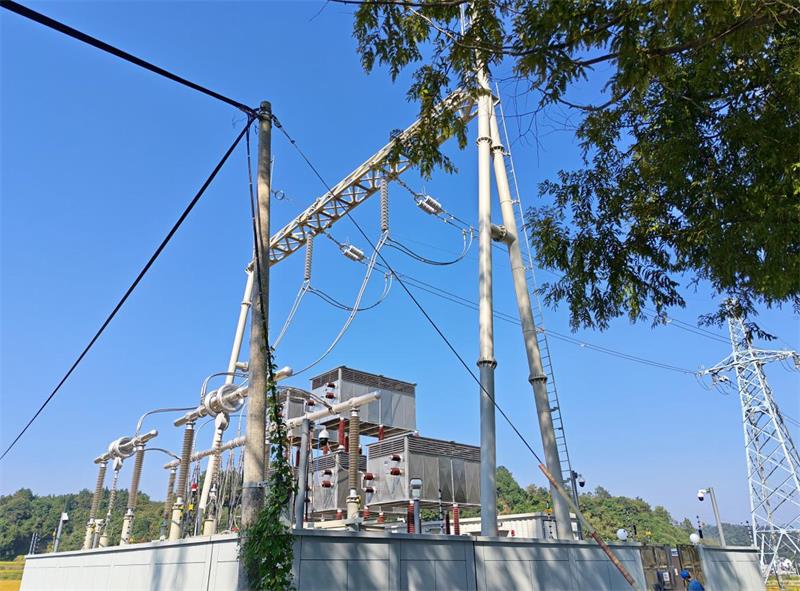
Polar-site station in Lin'an (Hangzhou)
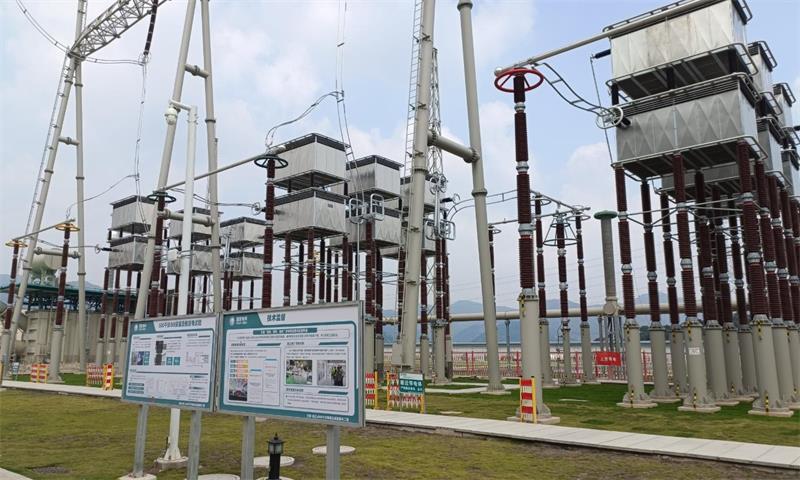
Converter station in Shangyu (Shaoxing)
The project deploys multiple service transmission links with card-mounted chassis equipment. Dual power supplies are configured to ensure power supply security, and a supporting network management system allows real-time monitoring of equipment operation status and optical-path parameters. Our company has designed three service transmission schemes (as follows) for different power service types, totaling 15 service links, covering critical services such as protection, control, fault recording, data acquisition and fire alarm.
1.Long-haul amplified direct link: optical modules work with EDFA amplifiers to achieve long-distance transparent transmission of switch services;
2. Single-fiber bidirectional amplified link: the core service channel of this project, adopting single-fiber bidirectional wavelength transmission to carry core UHVDC control-protection and fault-recording services;
3.Photo-electric conversion extension link: realizes cross-station long-distance transmission of fire-alarm Ethernet services.
All chassis are deployed with a compact hardware architecture, and the web-based network management facilitates on-site operation & maintenance staff to monitor equipment status in real time.
On-site commissioning was carried out as scheduled in strict compliance with power engineering implementation procedures, covering full-process tasks including equipment rack-mounting, card installation, optical fiber routing, optical-path tuning, network-management configuration and service joint debugging.
Fiber-jumper selection specifications were strictly enforced during implementation to guarantee proper optical-path matching. After hardware deployment, optical-power calibration was performed for each EDFA amplifier to ensure stable output, and DDM monitoring data from OTU boards were read to verify key indicators such as transmitter/receiver optical power and module temperature.
A hierarchical test approach was adopted: line-side loop-back tests were first performed to verify the hardware optical path, and secondary-service devices were then connected channel by channel. Combined with network-management alarm status and back-end service data, each channel was validated channel by channel to ensure compliance upon commissioning.
Partial on-site equipment photos are as follows:
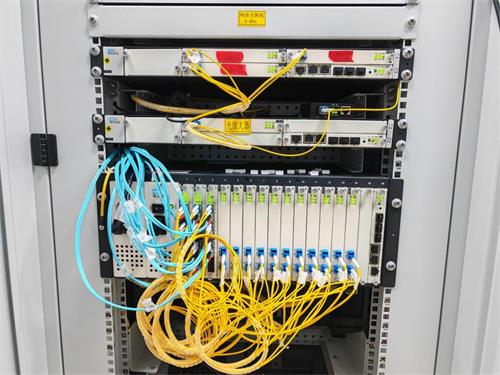
Fig.1 Amplifier equipment at Guanyincun polar-site station (on-site)
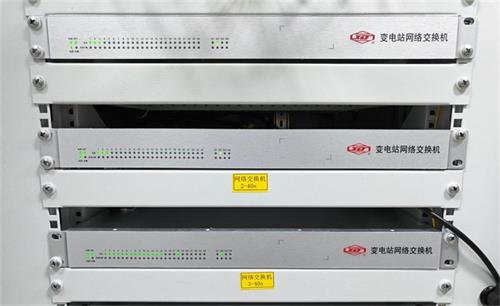
Fig.2 Switch equipment at Guanyincun polar-site station (on-site)
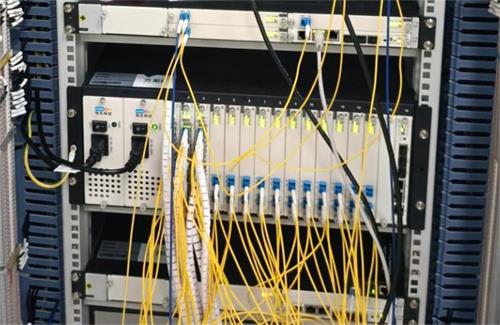
Fig.3 Amplifier equipment at Shangyu converter station (on-site)
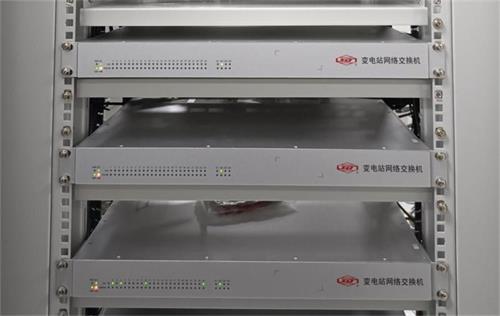
Fig.4 Switch equipment at Shangyu converter station (on-site)
After system commissioning, the entire equipment set operates stably with sufficient optical-power margin, and all indicators meet the UHVDC power-communication standards.
- EDFA optical amplifier units operate stably, with output optical power meeting the design values, no alarms on boards, and effective compensation for the loss of long-haul optical cables;
- OTU optical transponder units maintain adequate receiving optical-power margin, with normal module temperature and no equipment alarms;
- All service channels are successfully activated. DC control & protection, fault recording, fire alarm and other services transmit stably, with bit-error indicators meeting power-communication specifications. The ultra-long-haul optical transmission system has officially entered service.
This project successfully achieves stable power-service transmission over a 220km ultra-long-haul high-loss link, validating the engineering practicability of the EDFA + OTU optical amplification solution for UHVDC grounding-pole supporting communication scenarios. The system can simultaneously carry multiple power services including protection, control, fault recording and fire alarm, and is equipped with visualized network management to facilitate later operation & maintenance.
The smooth delivery of the project sets a high-quality engineering benchmark for ultra-long-distance power-communication construction of domestic UHVDC projects, provides mature and replicable practical reference for subsequent similar long-distance power-communication projects, and strongly supports the scheduled commissioning and operation of the Gansu-Zhejiang UHVDC project.

Address : Room 901, Building 6, JD Smart Industrial Park, No. 128, Juhua Stone Avenue, Huashan Town, Huadu District, Guangzhou City
Tel : +86 15989256178
Whatsapp : +86 15914235380
Email : sales@fiberwdm.com