(Fiberwdm All rights Reserved)
This case shares our company's optimization solution for the service stability issues caused by the deployment of 100G multimode optical modules in the live network of a computing power cluster enterprise. Through analyzing the matching and adaptation issues between transmission distance and optical modules/cables, a scenario-based replacement solution for multimode/singlemode optical modules was formulated, which ultimately resolved network faults completely and guaranteed the stability of inter-cabinet communication in the computing power cluster.
I. Project Background
A computing power cluster company deployed
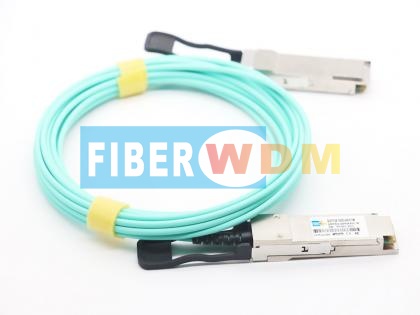
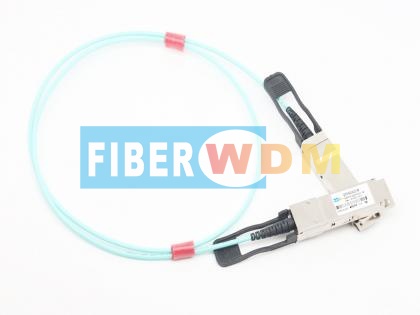
QSFP28 100G SR4 multimode optical modules on a large scale in its live network for the interconnection of computing power nodes and network devices between cabinets. Frequent communication instability issues occurred during business operation, affecting the normal scheduling and data transmission of the computing power cluster. It was therefore necessary to locate the problems and formulate an optimized solution.
II. Problem Troubleshooting and Analysis of Core Causes
Our technical team conducted a comprehensive investigation of the live network topology, optical transmission links and hardware configuration, and identified the core problem as the mismatch between the transmission specifications of optical modules and the actual link distance, as detailed below:
- The customer has a large number of inter-cabinet connection scenarios, and the actual transmission distance of some optical fiber links far exceeds expectations, even exceeding 100 meters.
- The QSFP28 100G SR4 is a multimode optical module, and its transmission distance is limited by the specifications of supporting multimode optical cables: OM3 optical cables support a maximum transmission distance of 70 meters, and OM4 optical cables support a maximum transmission distance of 100 meters. Long-distance transmission with no margin will lead to optical power attenuation and signal distortion, directly causing business instability.
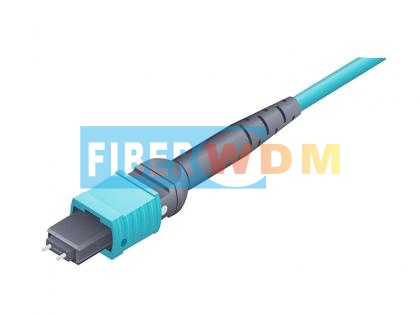
- Although some short-distance links (within 50 meters) do not exceed the distance limit, the supporting MPO cables have high insertion loss, which further exacerbates the signal attenuation problem of multimode links.
III. Customized Solution
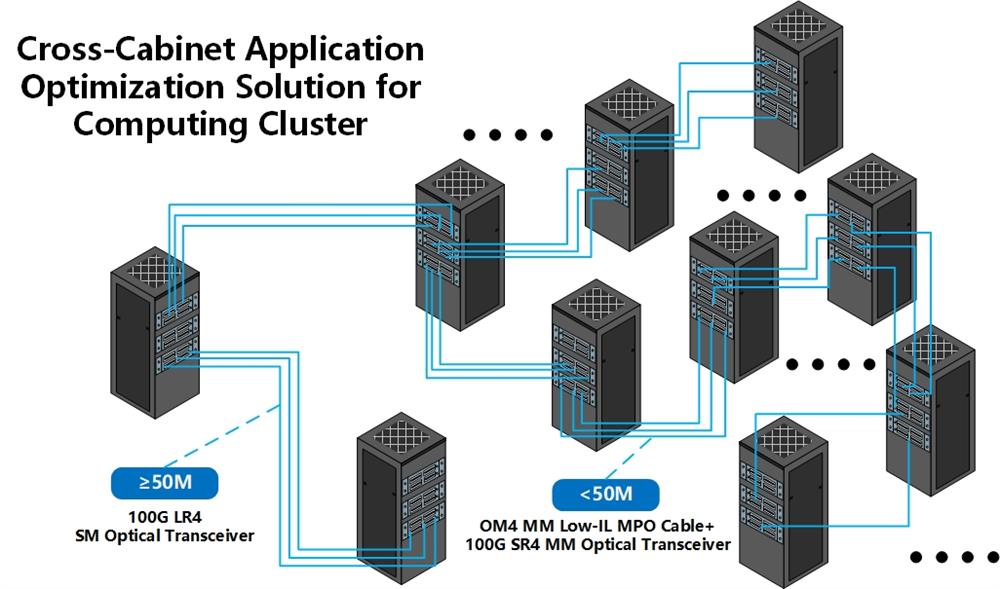
Combined with the link distance distribution of the computing power cluster, the compatibility of live network hardware and the principle of cost optimization, a scenario-based optimized solution for the matching of optical modules and optical cables classified by transmission distance was formulated. The core is "optimizing multimode supporting facilities for short distances and replacing with singlemode optical modules for long distances":
- For inter-cabinet links over 50 meters: Uniformly replace QSFP28 100G SR4 multimode optical modules with QSFP28 100G LR4 singlemode optical modules. Singlemode optical modules support long-distance transmission of up to 10km, which fully meets the requirements of long-distance inter-cabinet links and fundamentally solves the distance limitation problem.
- For short-distance links within 50 meters: Retain the 100G SR4 multimode optical modules and replace the supporting optical cables with OM3/OM4 specification low-insertion-loss MPO multimode cables to reduce link insertion loss and improve the signal transmission stability of multimode links. At the same time, take advantage of the cost advantage of multimode optical modules to control the transformation cost of short-distance links.
IV. Implementation Effects
After the customer completed the transformation of all live network links and hardware update in accordance with this solution, the following effects were achieved:
- The business instability caused by the mismatch of optical transmission links was completely eliminated, and the packet loss rate and latency fluctuation of data transmission between cabinets in the computing power cluster returned to the standard indicators.
- The scenario-based hardware configuration solution balances transmission stability and transformation cost, avoiding unnecessary full-link single-mode transformation and effectively controlling the network optimization investment of the computing power cluster.
- The matching standards for on-network optical modules and optical cables have been standardized, providing a clear basis for the hardware selection of optical transmission for the subsequent expansion and topology adjustment of the computing power cluster.
V. Case Summary
The high-density and high-bandwidth interconnection between cabinets in a computing power cluster has extremely high requirements for the matching of optical transmission links. The 100G SR4 multimode optical module is only suitable for short-distance (≤100 meters) interconnection scenarios with OM3/OM4 optical cables. If there is a demand for long-distance inter-cabinet connection, the 100G LR4 singlemode optical module should be preferred. In the deployment of optical communication, it is necessary to accurately select optical modules according to the actual transmission distance and optical cable specifications, and pay attention to the use of low-insertion-loss supporting cables to ensure the long-term stable operation of high-bandwidth links.